As Pep Guardiola prepares for his Manchester City exit, we analyze how his tactical genius and obsession with perfection changed English football forever.
Johan Cruyff once remarked that winning was merely a momentary achievement, whereas a reputation was something that lasted a lifetime. In the decade since Pep Guardiola arrived in the Premier League, he has managed to secure both in abundance. As Manchester City brace for the departure of the Catalan visionary, they are not just losing a manager; they are losing the architect who redesigned their entire club. Guardiola’s legacy is a monument to the Dutch philosophy he inherited at Barcelona, a style of play that emphasizes possession, positioning, and a relentless pursuit of space. He didn't just win trophies in England; he fundamentally altered the DNA of the domestic game, from the elite stadiums of the Premier League to the muddy pitches of the lower leagues.
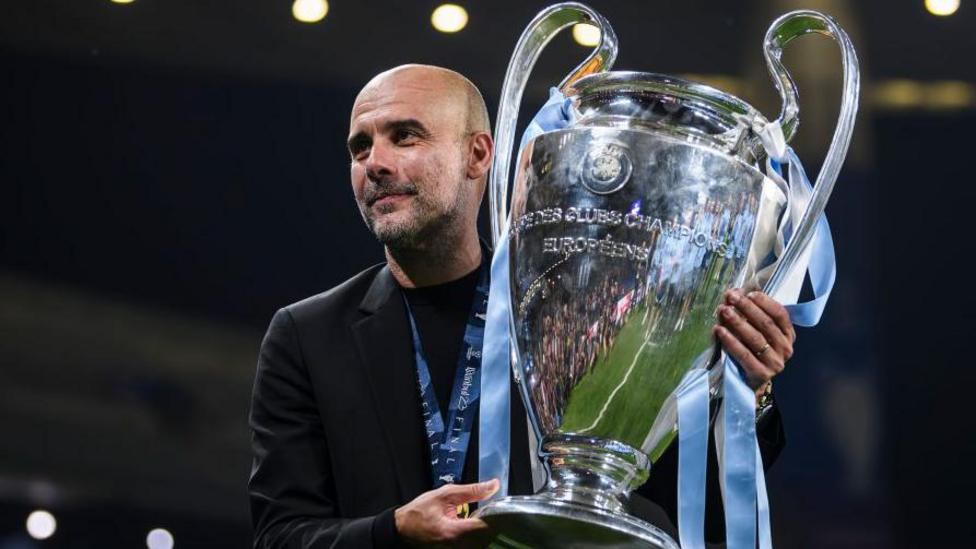
The sheer scale of his success is difficult to comprehend. Six Premier League titles, a Champions League, and a litany of domestic cups have filled the trophy cabinet at the Etihad, but the numbers only tell half the story. The true measure of Guardiola’s influence is found in the way his rivals have been forced to mimic his methods. Before Pep, the English game was often defined by its physicality and directness. Today, even teams fighting relegation attempt to play out from the back, recognizing that control of the ball is the most effective form of defense. He has made the exceptional seem routine, turning the act of winning into a mathematical certainty through tactical precision.
The Cruyffian Inheritance
Guardiola has never been shy about crediting his mentor, Johan Cruyff, for his footballing education. He famously admitted to knowing nothing about the game until he fell under the instruction of the legendary Dutchman at Barcelona. Cruyff’s philosophy was built on the idea that the ball is the most important player on the pitch, and Guardiola took that seed and grew it into a global phenomenon. At Manchester City, this manifested in a style of play that was almost symphonic in its coordination. Every player on the pitch, including the goalkeeper, was expected to be a playmaker. This demand for technical excellence led to the early departure of club legends like Joe Hart, as Guardiola prioritized a keeper who was as comfortable with his feet as he was with his hands.
This uncompromising approach was not always met with universal approval. In his first season in England, Guardiola went trophyless, leading critics to suggest that his style was too fragile for the rigors of the Premier League. However, rather than diluting his philosophy, he doubled down on it. He invested in players who could execute his vision and refined his tactical setup to account for the league’s unique challenges. The result was the 'Centurions' season, a campaign where City reached 100 points and broke nearly every record in the book. It was the moment the English game realized that Pep’s way wasn't just beautiful; it was devastatingly effective.
Tactical Alchemy: From Lahm to Stones
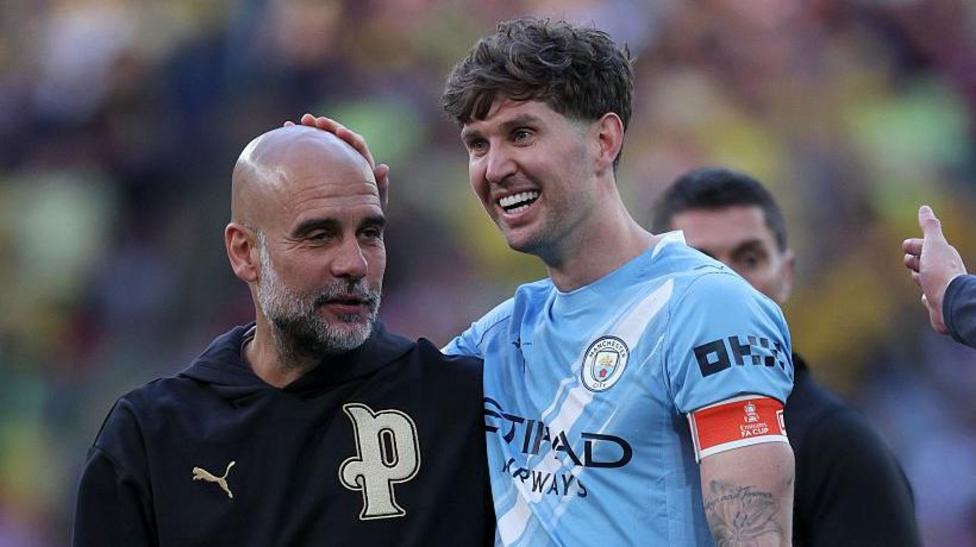
One of the most fascinating aspects of Guardiola’s tenure has been his ability to transform world-class players into something entirely new. He possesses a rare gift for seeing potential in players that they often don't see in themselves. At Bayern Munich, he famously moved Philipp Lahm from right-back into a holding midfield role, a transition that many thought was a mistake until they saw the results. At Manchester City, he performed a similar feat with John Stones. Recognizing that Stones possessed the composure and passing range of a top-tier midfielder, Guardiola began utilizing him in a hybrid role that allowed him to step out of the defensive line and dictate play from the center of the pitch.
This tactical innovation reached its peak during the 2023 Champions League final against Inter Milan. Stones operated as a 'number eight,' a role he had never played before, yet he looked like he had been born for it. By creating these tactical overloads, Guardiola was able to exert total control over the middle of the park, suffocating opponents and preventing them from launching counter-attacks. This ability to remove high-class players from their orthodox positions and use them in roles no one would regard as natural has become a hallmark of his career. It is a strategy that requires immense trust from the players, but given the results, that trust has never been in short supply.
The Managerial Diaspora
Guardiola’s influence is not limited to the players he coached; it extends to the managers he mentored. The current landscape of European football is populated by coaches who carry his tactical DNA. Mikel Arteta, who was given his first coaching role as Pep’s assistant at City, is now the man challenging him for the Premier League title at Arsenal. Enzo Maresca, another former assistant, is the front-runner to replace him at the Etihad after successful stints at Leicester and Chelsea. Vincent Kompany, who captained City under Guardiola, is now leading Bayern Munich, while Xabi Alonso’s incredible success at Bayer Leverkusen was preceded by a playing stint under Pep in Germany.
This managerial diaspora ensures that Guardiola’s ideas will continue to flourish long after he has left the technical area. His assistants don't just learn his tactics; they learn his obsession with detail and his relentless work ethic. Even coaches who never worked directly with him, like Karl Robinson or Andoni Iraola, admit to studying his methods to improve their own teams. He has created a framework for the modern game that others are eager to follow, proving Cruyff’s point that having people copy you is the greatest gift a manager can receive. The 'Pep way' has become the industry standard for excellence.
The Gambler and the Genius
Despite his overwhelming success, Guardiola has occasionally been accused of 'over-thinking' in the biggest moments. His decision to start the 2021 Champions League final without a recognized holding midfielder is often cited as the prime example of this tendency. On that night in Porto, City were beaten 1-0 by Chelsea, and the manager’s tactics were blamed for the defeat. However, this willingness to gamble is also what makes him a genius. He is never satisfied with the status quo and is constantly searching for a way to find an extra percentage of advantage over his opponents. He would rather fail attempting something revolutionary than succeed by playing it safe.
This ruthless drive to innovate is what kept City at the top for so long. While other teams might have become complacent after winning a title, Guardiola’s City always came back hungrier and tactically sharper. He introduced the 'six-second rule' for regaining possession and perfected the use of the 'false nine' with Lionel Messi, before pivoting to a more traditional focal point in Erling Haaland. His ability to adapt his philosophy to the personnel at his disposal is a testament to his intelligence. Whether he was using diminutive midfielders to dominate possession or powerful strikers to batter defenses, the core principles of control and space remained constant.
The Shadow Over the Pyramid
Guardiola’s impact is felt far beyond the glittering lights of the Champions League. His fingerprints can be found in the lower divisions of English football and even at the grassroots level. Junior coaches across the country now encourage their young players to keep the ball on the ground and play out from the back, inspired by what they see every weekend at the Etihad. He has made it mainstream to think outside the box regarding player positions and team structures. The courage he showed in discarding traditional English football tropes has given other coaches the confidence to try their own unorthodox ideas.
As the Catalan prepares for his final matches against Bournemouth and Aston Villa, the feeling of an era ending is inescapable. He has achieved everything possible in English football, turning Manchester City into a global powerhouse and setting a standard that may never be matched. His greatest legacy will be the trophies, but his most enduring impact will be the way he changed the game’s fundamental nature. Guardiola didn't just manage a football team; he conducted a decade-long masterclass in tactical innovation. When he finally walks away, the echoes of his genius will continue to resonate through every stadium in the country for generations to come. more football news on MATCHLINE