Controversial video assistant referee calls in London and Motherwell have sparked a fierce debate over the consistency and resources of modern officiating.
The beautiful game has always been a theatre of subjective opinion, but the introduction of the Video Assistant Referee (VAR) was supposed to provide a definitive script. Instead, a series of explosive incidents across the Premier League and the Scottish Premiership have illustrated a widening gulf between the promise of technology and the reality of its application. In a single week, two title-defining moments have left managers fuming, fans disillusioned, and pundits questioning whether the hardware is actually helping the software in the middle of the pitch.
From the gleaming London Stadium to the floodlit intensity of Fir Park, the drama centered on stoppage-time interventions that snatched points and altered the trajectory of championship battles. In London, West Ham were denied a late equalizer against Arsenal, while in Scotland, Celtic were handed a reprieve that many observers deemed a harsh injustice against Motherwell. These decisions did more than just decide matches; they highlighted the stark differences in how VAR is funded, operated, and perceived by the wider public across the United Kingdom.

The London Stadium Drama: A Question of Perspective
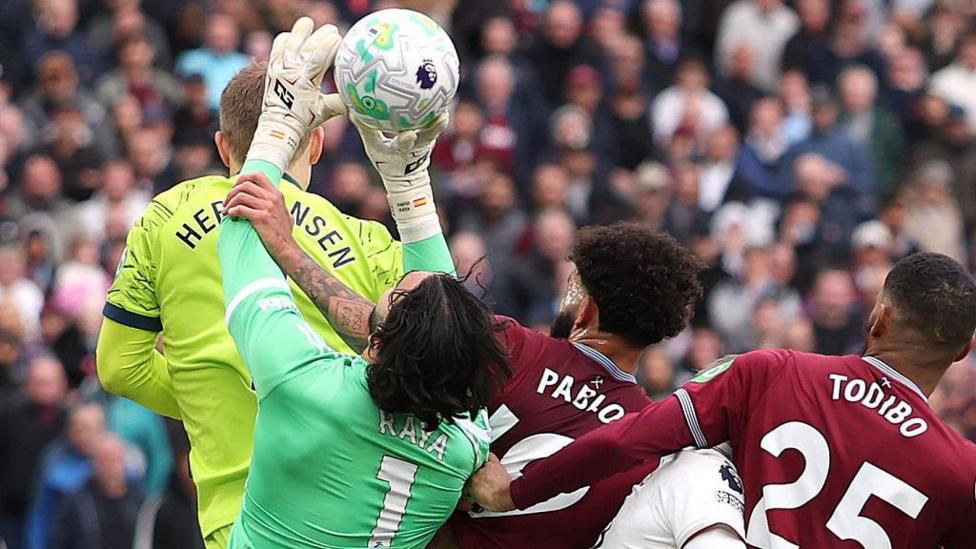
When West Ham’s Pablo challenged Arsenal goalkeeper David Raya in the dying moments of their Premier League clash, the stadium held its breath. The ball finished in the net, seemingly securing a vital point for the Hammers and denting Arsenal’s title charge. However, the subsequent four-minute review by VAR Darren England told a different story. Through 17 different replays and nearly three minutes of scrutiny, the officiating team concluded that Raya had been fouled, ensuring a 1-0 win for Mikel Arteta’s side.
The fallout from this decision was immediate and divided. While refereeing experts largely agreed that the foul was clear upon review, the perception among neutral fans was one of skepticism. Many pointed to Arsenal’s own tactical use of set-piece physicality as a reason why the decision felt inconsistent. Danny Murphy, speaking on national television, noted that the backlash was intensified by Arsenal’s status as title contenders, suggesting that fan sentiment often distorts the objective reality of the footage.
What set the London incident apart was the sheer volume of data available to the officials. With a minimum of 28 cameras at every Premier League ground, the VAR team had every conceivable angle to verify the contact on Raya’s arm. This technical abundance allowed referee Chris Kavanagh to make what he felt was a categorical decision, even if it took over four minutes to reach. In the high-stakes world of the English top flight, the cost of accuracy is often measured in the minutes of frustration felt by those in the stands.
The Fir Park Controversy: VAR Lite and the Old Firm
In Scotland, the narrative shifted from technical precision to resource-based limitations. With only eight seconds remaining on the clock at Motherwell, Celtic were awarded a penalty for handball against Sam Nicholson. Kelechi Iheanacho stepped up to convert, securing a 3-2 win that keeps Celtic’s title hopes firmly in their own hands. Yet, unlike the Arsenal game, there was a near-universal consensus that the intervention was a mistake, a move described by Hearts head coach Derek McInnes as disgusting.
The controversy stems from the quality of the evidence presented to referee John Beaton. Unlike the Premier League’s 28-camera setup, Scottish matches often operate with as few as six cameras. When VAR Andrew Dallas called Beaton to the monitor, he could only provide one conclusive angle. The referee watched just two replays over 20 seconds before pointing to the spot. This discrepancy in resources has led many to label the Scottish system as VAR Lite, a product that lacks the tools to make the categorical judgments required at this level.
Bobby Madden, a former elite referee in the Scottish Premiership, was scathing in his assessment of the incident. He argued that VAR was designed to identify boulders—clear and obvious errors—not grains of sand. The decision at Fir Park, in his view, went against the entire ethos of the technology’s introduction. For Hearts and their supporters, who are desperate to break the 40-year Old Firm duopoly, the penalty felt like a systemic failure that favored the bigger club at a critical juncture of the season.
The Howard Webb Doctrine: Seeking Absolute Certainty
As the debate rages, Premier League referees' chief Howard Webb has attempted to clarify the threshold for intervention. Discussing a recent Manchester United goal where the ball potentially touched Benjamin Sesko's hand, Webb emphasized that VARs must be absolutely categorical before overturning an on-field decision. If a review through multiple angles still leaves a shred of doubt, the original call must stand. This principle of certainty is intended to prevent the kind of over-officiating seen at Fir Park.
The Sesko incident is a prime example of the technology working as intended under Webb's guidance. Despite having dozens of cameras, Stuart Attwell felt he could not prove beyond a doubt that the ball hit the player's fingers. By contrast, the decision to award Celtic a penalty based on a single, grainy angle from the Motherwell floodlights appears to fly in the face of this doctrine. It raises the question: if the world's richest league cannot find certainty with 28 cameras, how can a league with six cameras justify such a bold intervention?
The challenge for officials like John Beaton is the inherent trust they must place in the VAR. When a referee is summoned to the pitchside monitor, the psychological pressure to change the decision is immense. Statistically, referees stick with their original call only a handful of times each season. This makes the VAR the true arbiter of the game, a reality that sits uncomfortably with those who believe the on-field official should retain ultimate authority.
The Human Factor and the Partisan Divide
One of the most persistent criticisms of VAR is that it has failed to end the arguments it was designed to resolve. If anything, the technology has amplified the noise. In the age of social media, fans are quick to share freeze-frames and even fabricated images to support their team’s narrative. The tribal nature of football ensures that no amount of video evidence will ever satisfy both sides of a contentious call.
Martin Callaghan, a Celtic fan writer, acknowledged that while the decision went his team’s way, the lack of suitable tools is a problem for everyone in the Scottish game. He argued that players, fans, and coaches are all suffering from a below-par product that creates million-pound consequences based on insufficient data. This sentiment was echoed by Gerry Mallon, chairman of the Foundation of Hearts, who called for officiating standards to be maintained to ensure that the league title is decided by players on the pitch, not by officials in a remote booth.
The partisan divide is perhaps most visible in the reaction to the Arsenal decision. Neutral observers often harbor a subconscious desire for the underdog to succeed, leading to a harsher critique of decisions that favor the elite. For West Ham, the sense of injustice is compounded by their relegation fears. In their eyes, the four-minute review was a search for a reason to disallow the goal, rather than a check for a clear error. This psychological barrier is something that no number of cameras can ever truly overcome.
A Future Defined by Resources
As we look toward the final weeks of the season, the focus remains on whether the officiating can match the intensity of the title races. The differences between the English and Scottish systems are now impossible to ignore. While the Premier League grapples with the time taken to reach decisions, the Scottish Premiership is struggling with the fundamental quality of its evidence. Both leagues are at a crossroads, needing to find a balance between the quest for perfection and the preservation of the game’s natural flow.
The call for more investment in Scottish VAR is growing louder. Without more camera angles and better technology, the risk of another Fir Park incident remains high. For the Premier League, the challenge is to streamline the process without sacrificing the accuracy that its 28 cameras provide. Howard Webb’s push for absolute categorical evidence is a step in the right direction, but it requires VARs to have the courage to say nothing when the footage is inconclusive.
Ultimately, the drama of the last few days has proven that technology is only as good as the people and resources behind it. Whether it is a foul on David Raya or a disputed handball by Sam Nicholson, these moments will be etched into the history of this season. The quest for a utopian world where every decision is accepted remains a pipe dream. In the end, we are left with a system that is still finding its feet, even as it decides the fate of champions and the future of clubs. more football news on MATCHLINE