
Thomas Tuchel has stunned the football world by leaving Phil Foden and Cole Palmer out of his World Cup squad, opting for form and tactical fit over fame.
Thomas Tuchel does not do sentiment. The German tactician has never been one to be swayed by the heavy weight of a player’s reputation or the glittering awards sitting on their mantelpiece. This week, he proved that no one is bulletproof by wielding a clinical axe on England’s World Cup squad. The omissions of Phil Foden and Cole Palmer are not merely a surprise; they represent a seismic shift in the hierarchy of the national team. Just two years ago, these two were the undisputed faces of the future, the dual engines of a technical revolution that was supposed to carry the Three Lions to glory in North America. Now, they are the most high-profile spectators of the summer.
The fall from grace has been as rapid as it was unexpected. Foden and Palmer shared a stage at the Manchester Opera House not long ago to collect the PFA Player of the Year and PFA Young Player of the Year awards respectively. It was a moment that felt like a coronation for two Manchester City academy products who had conquered the domestic game. One had become the heartbeat of Pep Guardiola’s winning machine, the other a talismanic figure who transformed Chelsea’s fortunes almost single-handedly. Yet, as the squad departs for the World Cup, that night in Manchester feels like a relic from a different era. Tuchel has made it clear that the currency of past success holds no value in his current selection process.
The Manchester Academy Bond and a Broken Dynasty
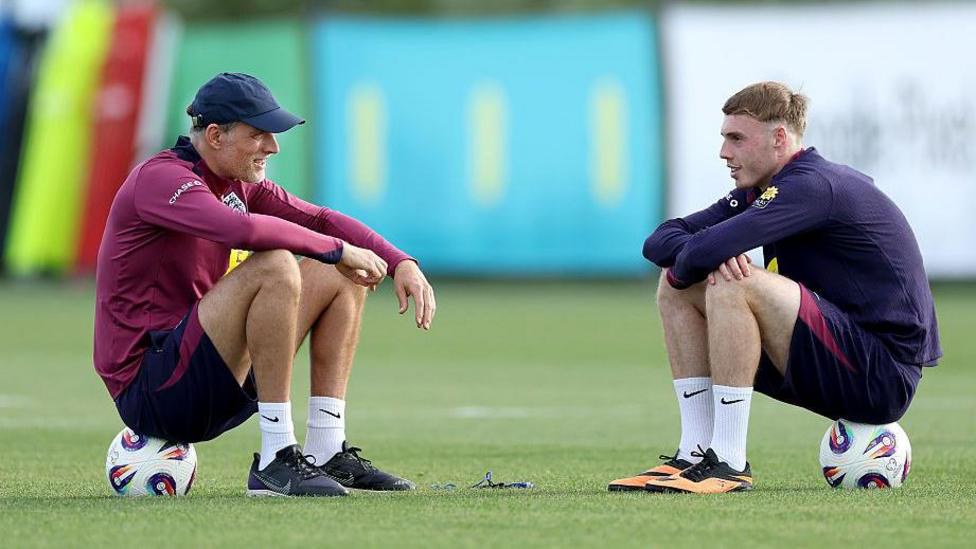
The shared history between Foden and Palmer is woven into the fabric of English football’s recent resurgence. They emerged from the same hallowed turf at the City Football Academy, separated by just a year in age but united by a level of technical proficiency that was once thought impossible for English midfielders. Foden was the prodigy who stayed, nurtured under the obsessive eye of Guardiola until he became the best player in the Premier League. Palmer was the rebel who realized his ceiling at the Etihad was being capped by the very system that produced him. His move to Stamford Bridge was a gamble that paid off immediately, turning him into a global star and England’s most clinical weapon off the bench at Euro 2024.
However, the synergy that many hoped would define the England midfield for a decade has evaporated. Tuchel’s decision to leave both behind is a scathing indictment of their recent contributions. While Foden struggled to find his rhythm in a shifting City side, Palmer found that the heavy burden of carrying Chelsea eventually took its toll. Their exclusion suggests that Tuchel viewed them as players who excelled in specific club structures but lacked the adaptability required for his high-intensity, rigid tactical requirements. The manager has prioritized players who fit his specific blueprint over those who require a team to be built around their individual eccentricities.
The Chelsea Talisman and the Waning Spark
Cole Palmer’s rise was so meteoric that a correction was perhaps inevitable, but few expected the dip to be this pronounced. During his first two seasons in West London, Palmer was a phenomenon, plundering 37 Premier League goals and displaying a level of composure that earned him the nickname "Cold Palmer." He was the man for the big occasion, evidenced by his equalizer against Spain in the Euro 2024 final just minutes after being introduced. That goal was supposed to be the launchpad for his international career, but instead, it served as the high-water mark before a steady decline in influence.
This season, the stats tell a sobering story for the 22-year-old. While nine goals in 25 league appearances is a respectable return for most, it lacks the clinical edge that made him the PFA’s standout young performer. The zip that defined his movement and the audacity of his passing have been replaced by a more lethargic presence on the pitch. Tuchel has clearly been watching closely, noticing that the moments of brilliance that once defined Palmer have become increasingly rare. In a squad where competition for the attacking midfield slots is fierce, a drop-off of this magnitude was always going to be fatal for his World Cup ambitions.
The Uruguay Nightmare: Foden’s Lost Opportunity
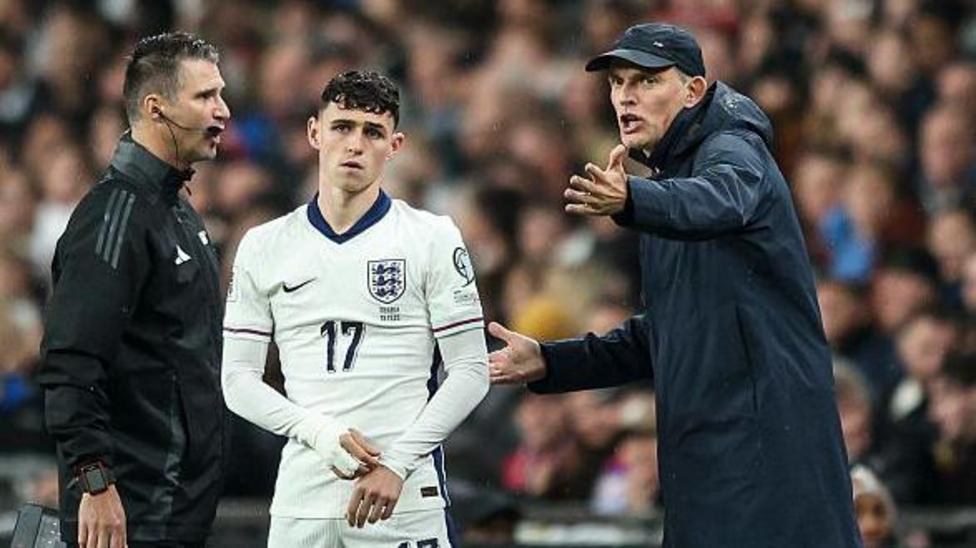
If Palmer’s exclusion was based on a gradual loss of form, Phil Foden’s fate was arguably sealed in a single match. The March friendly against Uruguay was framed as the ultimate audition for the number 10 role. With Harry Kane sidelined, Tuchel handed the keys to the kingdom to Foden, tasking him with being the creative fulcrum of the side. It was a role Foden had long craved, away from the restrictions of the wing where Gareth Southgate often deployed him. The result, however, was a disaster for the City midfielder. He cut a peripheral figure, frequently dropping too deep in search of the ball and failing to provide any vertical threat to a disciplined Uruguayan defense.
Tuchel’s frustration was visible on the touchline as Foden drifted aimlessly between the lines. The experiment was terminated just 11 minutes into the second half when Foden was hauled off. In a move that now seems heavy with irony, he was replaced that night by Palmer, who fared little better. That hour in March was the moment the German manager seemingly made up his mind. He saw a player who, for all his technical brilliance at club level, struggled to impose his will on an international game when the tactical instructions were tightened. Since that evening, Foden’s confidence appeared to shatter; despite a brief burst of six goals in five games before Christmas, he has failed to find the net since, rendering him surplus to requirements.
The Rise of the New Vanguard
Tuchel’s selections highlight a preference for physical robustness and tactical discipline over raw creative flair. Morgan Rogers of Aston Villa has become the poster boy for this new era. Rogers, who recently scored a stunning third goal in Villa’s 3-0 Europa League demolition of Freiburg, offers a power and directness that neither Foden nor Palmer can match. He has been a constant presence in Tuchel’s squads, earning the manager’s trust through a series of selfless performances. Rogers represents the "modern" number 10 that Tuchel craves: someone who can press with intensity, carry the ball through midfield transitions, and contribute defensively.
The ruthlessness of this selection is further highlighted by the exclusion of Morgan Gibbs-White. The Nottingham Forest man has been in scintillating form, racking up 14 goals to become the joint-highest English scorer in the Premier League. Yet, even those numbers were not enough to convince Tuchel. Gibbs-White’s lack of minutes in competitive matches under the new regime, coupled with his limited involvement against lower-ranked opposition like Andorra, suggests that the manager had already categorized him as a backup option. It is a harsh reality for players who have performed well at club level but do not possess the specific profile Tuchel is searching for to compete with the elite nations in the United States.
The Eze Influence and Arsenal’s Blueprint
In the vacuum left by Foden and Palmer, Eberechi Eze has emerged as the big winner. The Arsenal playmaker may not boast the goal-scoring statistics of some of his rivals — he managed just seven goals and two assists during the Gunners' Premier League title campaign — but he offers a profile that Tuchel finds irresistible. Eze provides a unique blend of unpredictability and ball retention that allows England to change the tempo of a game. His three goals in six World Cup qualifiers proved to the coaching staff that he can produce the goods when the pressure is highest, even if his club stats look modest on paper.
Eze’s value was actually magnified by his absence during the March friendlies. While Foden and Palmer struggled to break down Uruguay and Japan, the team looked devoid of the creative spark that Eze routinely provides. Tuchel realized that without the Arsenal man, the England attack became too predictable and easy to manage. By choosing Eze over the more established stars, Tuchel is betting on a player who can offer a different dimension off the bench or start in a tactical system that demands high-speed decision-making. It is a bold move that places a huge amount of pressure on Eze to deliver on the world stage.
The Long Road Back to International Relevance
The message to the rest of the squad is loud and clear: nobody is safe. By omitting the reigning PFA award winners, Tuchel has dismantled the idea that a high profile or a heavy price tag guarantees a seat on the plane. Even established veterans like John Stones have only survived the cull because they offer a level of experience and positional intelligence that the manager deems essential. For Foden and Palmer, the challenge now is to rebuild their game and prove they can adapt to a manager who demands more than just occasional flashes of genius. They must watch from home as a new-look England attempts to conquer the world without them.
The upcoming tournament will serve as the ultimate litmus test for Tuchel’s philosophy. If England’s attack stutters in the heat of North America, the ghosts of Foden and Palmer will loom large over his tenure. However, if the likes of Rogers and Eze propel the team to the latter stages, it will be viewed as one of the most masterful pieces of squad management in the history of the national team. For now, the two Manchester City academy graduates are left to reflect on a season where their reputations were not enough to save them from a manager who values the present over the past. more football news on MATCHLINE