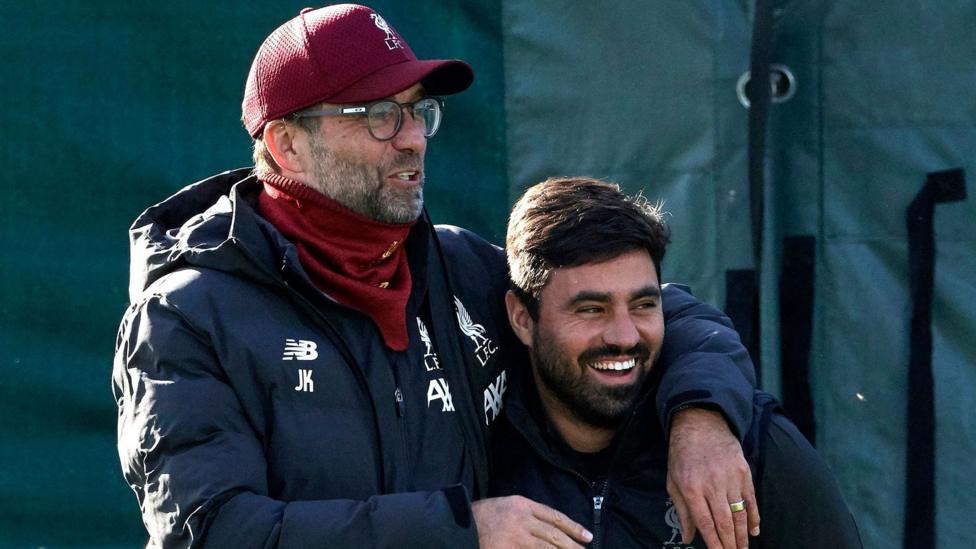
After winning 19 trophies in 13 years at Chelsea, Paul Green has traded West London for Bay FC, bringing a wealth of experience to the NWSL's newest frontier.
Paul Green spent thirteen years as the quiet architect of the most dominant force in English women’s football. By the time he walked away from Chelsea in early 2026, the sheer volume of his success had become a domestic burden; nineteen major trophies had been secured, so many that most of the medals ended up stored in a cardboard box tucked away beneath his bed. It was only after his departure, amid a period of reflection and family time, that the magnitude of his achievements in West London truly began to sink in.
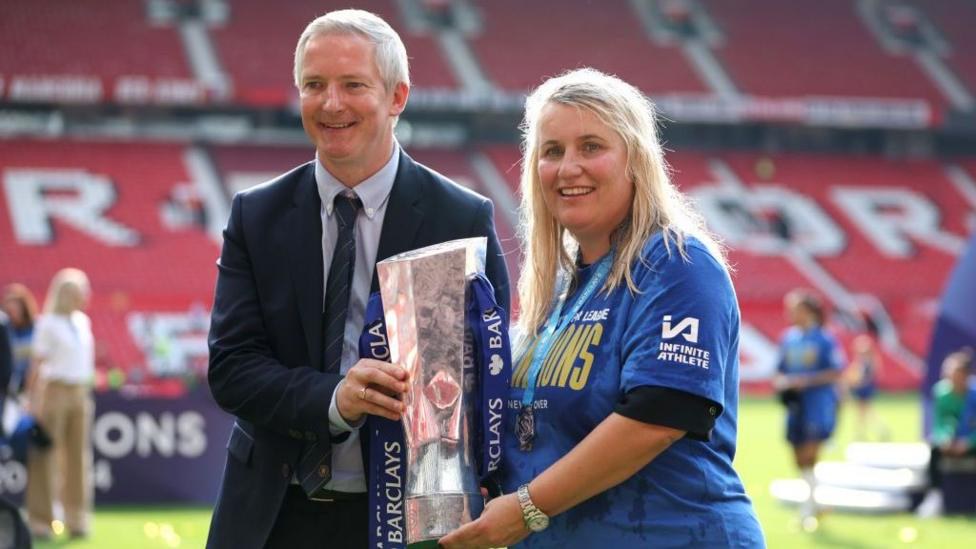
The Partnership That Redefined the WSL
Green’s tenure at Chelsea was defined by a formidable partnership with Emma Hayes. Together, they transformed a club with potential into a ruthless winning machine. During his leadership, the Blues secured six successive Women’s Super League titles, a run of dominance that Green believes will never be replicated. He was the man behind the curtain, handling the recruitment and organizational structure that allowed Hayes to focus on the tactical nuances that broke the stranglehold of the traditional powers in the English game.
Under Green's guidance, Chelsea reached the pinnacle of European football, making it to the Champions League final in 2021. Even after Hayes departed for the United States national team, the foundation Green built continued to deliver results, with the most recent league title coming under the stewardship of Sonia Bompastor in 2025. His sudden exit in February was a shock to the system, sparked by reports of shifting dynamics within the Chelsea hierarchy as the club moved in a different direction. Yet, Green left with his head high, knowing he had left the institution in a vastly superior state than he found it.
The transition from a decade-plus of rigid routines to a period of unemployment was initially jarring for a man accustomed to the high-stakes environment of the WSL. Green admits that the lack of structure was difficult to navigate, but the overwhelming support from the global football community provided a needed boost. He spent seven months recalibrating, waiting for a project that offered the same spark of potential that Emma Hayes had sold to him thirteen years ago. He found that spark in the San Francisco Bay area.
Building a New Frontier at Bay FC
The appointment of Green as Chief Football Officer at Bay FC in September represents a major coup for the National Women's Soccer League. He joins a project led by former FA director Kay Cossington and the multi-club ownership of Bay Collective. For Green, the attraction was simple: the opportunity to build something from the ground up once again. He sees striking similarities between the early days of the Chelsea revolution and the current state of Bay FC, a club with massive ambition but an immediate need for organizational refinement.
The challenge in San Francisco is starkly different from the one he left in London. Bay FC currently find themselves languishing at the bottom of the NWSL table, struggling to find consistency as the 2026 season draws to a close. Green has not wasted time in identifying the issues. He has vowed to utilize his extensive global network to overhaul the roster immediately, seeking to blend the current nucleus of talent with proven winners from the European market. He understands that while the American league is highly competitive, it requires a specific type of infrastructure to sustain long-term success.
Beyond recruitment, Green is focused on the physical foundation of the club. Bay FC are set to move into a new state-of-the-art training facility next year, a move he considers essential for attracting elite talent. His experience at Chelsea taught him that trophies are won long before the whistle blows on matchday; they are won in the quality of the medical staff, the scouting departments, and the daily environment provided to the players. He is essentially transplanting the Chelsea blueprint into the heart of California’s football scene.
The Homegrown Talent Crisis in England
Despite his new role in the United States, Green remains deeply concerned with the state of the game back in England. During his time at Chelsea, he oversaw the development of future stars like Aggie Beever-Jones and Lexi Potter. Seeing Potter make her England debut in a recent 5-0 win over Greece and Beever-Jones help the Lionesses to Euro 2025 glory brought a sense of pride, but Green is vocal about the narrowing pathways for the next generation of English youngsters. He believes the current academy system is no longer sufficient for the demands of the modern WSL.
The statistics support his concern; game time for homegrown English players has been on a steady decline as clubs opt for established international stars. Green’s solution is as controversial as it is pragmatic. He is a staunch advocate for the introduction of 'B teams' into the lower rungs of the English football pyramid. He points to the success of this model in Spain and Germany, where young prospects gain invaluable experience playing against senior professionals in a competitive league structure rather than the isolated environment of U21 football.
At Chelsea, Green utilized a robust loan program to bridge this gap, but he acknowledges that not every club has the resources to manage such a complex network of temporary moves. He argues that if the FA and the league do not address the lack of exposure for young talent, the long-term health of the England national team will inevitably suffer. While Sue Day and Sarina Wiegman have expressed similar worries, Green believes that structural changes, rather than mere cooperation between clubs, are the only way to solve the bottleneck of talent.
A Legacy of Silverware and a Future of Growth
As Paul Green begins this new chapter in the United States, he does so with the perspective of a man who has already conquered one mountain. He no longer feels the need to keep his medals hidden under the bed; he has finally had them framed, a symbolic move that marks the end of his Chelsea chapter and the start of his Bay FC journey. His focus has shifted from maintaining a dynasty to creating one, applying the lessons learned from Emma Hayes and the cold winters of Cobham to the sun-drenched pitches of San Francisco.
The NWSL presents a unique set of hurdles, from the salary cap to the draft system, but Green’s core philosophy remains unchanged. He believes in the power of infrastructure and the importance of finding the right human beings to fill a locker room. Whether he is arguing for B-teams in England or scouting the next breakout star for Bay FC, Green remains one of the most influential figures in the women’s game. His move to America is not just a career change; it is a statement of intent for a league that continues to attract the brightest minds in world football. more football news on MATCHLINE