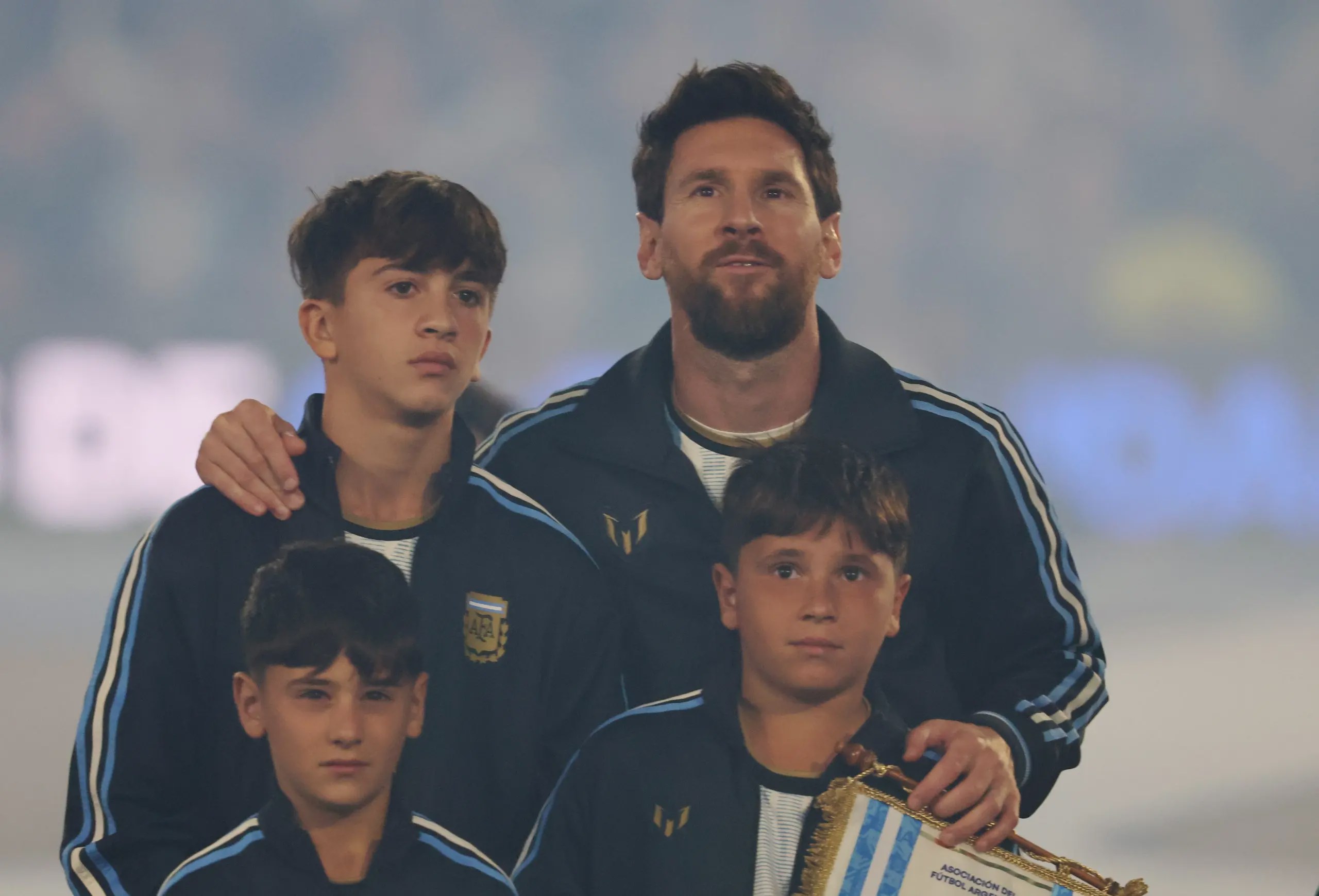
Lionel Messi has officially surpassed Miroslav Klose as the greatest scorer in World Cup history, leading Argentina to victory with a vintage masterclass.
Exactly forty years to the day after Diego Maradona slalomed through the England defence to score the Goal of the Century, Lionel Messi chose the same date to etch his own name into the highest reaches of footballing immortality. On a night in which history felt like a tangible presence in the stadium, the 38-year-old maestro dismantled Austria, erased a penalty miss from his mind, and finally stood alone at the summit of the World Cup scoring charts. It was a performance that transcended mere statistics; it was a defiant statement from a player who refuses to let the twilight of his career dim his brilliance.
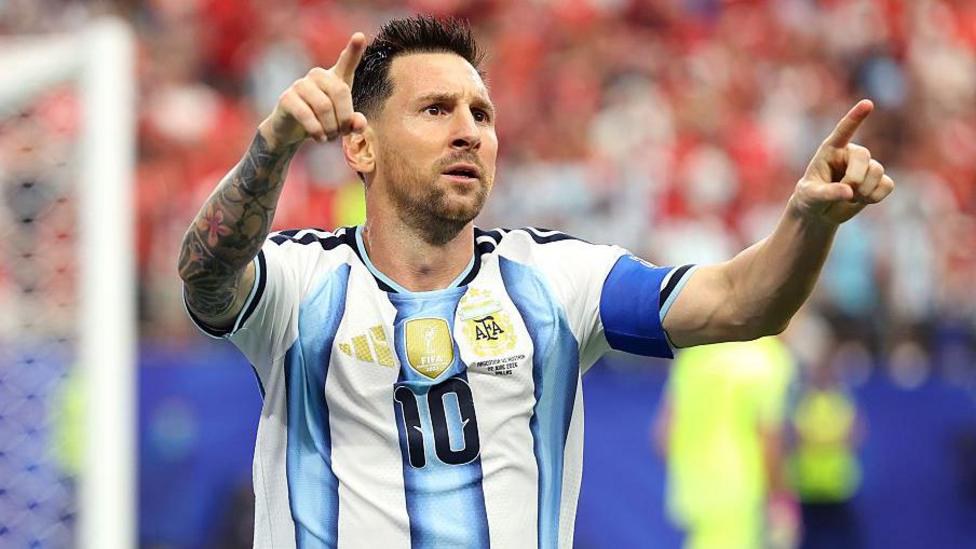
Surpassing the Legends: Klose and Beyond
Miroslav Klose’s record of 16 World Cup goals had stood since 2014, a mark of consistency and longevity that many thought would take decades to overhaul. Messi, appearing in his sixth tournament, has systematically dismantled that notion. His first goal of the night, a clinical low strike after a clever dummy from Thiago Almada, took him to 17. By the time he squeezed his second into the bottom corner in stoppage time, he had reached 18. It is a tally that reflects twenty years of excellence, spanning from his first goal as a teenager in 2006 to this record-shredding night in 2026.
What makes this achievement more remarkable is the concentration of his scoring in his later years. Twelve of his 18 World Cup goals have been scored since he turned 35. It is an inversion of the traditional career arc. While most forwards lose their edge as the years pile up, Messi has refined his game into a series of high-impact moments. He does not need to cover ten kilometres a match anymore. He simply needs to be in the right five metres of space at the right microsecond. His left foot remains the most dangerous weapon in the sport, responsible for 14 of his tournament strikes.
The Intelligence of the 39-Year-Old Version
Watching Messi in 2026 is like watching a grandmaster play speed chess. He is constantly scanning, surveying the defensive structure of the opposition, and identifying the exact moment it will fail. Against Austria, he spent large portions of the game at a walking pace, yet he created more chances and found more space than players half his age. He has reached a stage where his football intelligence is so far beyond the norm that he can manipulate entire defensive blocks simply by standing still in the correct area.
As Spanish journalist Guillem Balague noted, there is no longer time to build statues or write deep analyses because the records are falling faster than we can document them. Messi’s ability to manage his body is perhaps his greatest feat of these later years. He is no longer the explosive winger of the Barcelona era, but he is a more efficient, more lethal version of a playmaker. He understands the rhythm of his own heart and the limits of his muscles, allowing him to sprint only when a goal is the guaranteed outcome. He has become the ultimate economist of movement.
Penalty Heartache and Immediate Redemption
The night was not without its moments of human fallibility. When Argentina were awarded an early penalty, the stadium held its breath for the inevitable celebration. Instead, Messi dragged his shot wide, becoming the first player to miss a spot-kick at this tournament. It was a moment that could have derailed a lesser player, especially one carrying the weight of a nation’s expectations. But Messi’s greatness has always been defined by his resilience. He took the miss 'very badly', by his own admission, but used that frustration as fuel for the remainder of the contest.
Redemption arrived 30 minutes later. The goal was a trademark of the modern Messi: a late run into the box, a perfectly timed reception of Medina's low cross, and a finish that left the goalkeeper rooted to the spot. It was as if the missed penalty had never happened. By the time he added his second in the dying moments, the miss was a forgotten footnote. He now holds the record for both the most penalties taken and missed in tournament history, a strange statistical quirk that only highlights how often he is at the centre of the action.
Dependency and the Scaloni Dilemma
While the world celebrates Messi, Argentina manager Lionel Scaloni faces a growing concern: his team’s utter reliance on their captain. Messi has scored all five of Argentina's goals at this World Cup. While his brilliance has secured passage to the last 32, the lack of output from the rest of the squad is a shadow over their title defence. Can they really expect a 38-year-old to carry the entire scoring burden all the way to the final? The supporting cast, including the likes of Lautaro Martinez and Julian Alvarez, must find their range if Argentina are to retain their crown.
For now, though, those questions are being drowned out by the roar of the crowd. Every time Messi touches the ball, there is a sense of impending history. He has been involved in 12 goals in his last six World Cup appearances, a run of form that would be impressive for a player in their absolute physical peak. To do it at nearly 39 is unprecedented. The debate over whether he is the greatest to ever play the game feels increasingly settled; at this point, he is simply competing against the ghosts of his own past performances.
The Carnival Continues
With a final group game against Jordan on the horizon, Messi has the opportunity to distance himself even further from the chasing pack. He is also closing in on Diego Maradona’s assist record, sitting level on eight. The narrative arc of his career is approaching a perfect conclusion, but Messi himself seems uninterested in the finish line. He spoke after the game of the joy he finds on the pitch and the happiness he gives the people. It is that pure connection with the game that keeps him running when his body should be telling him to stop.
We are living in the final chapters of a story that will be told for a century. The records Messi is setting today will likely stand for as long as Klose’s did, if not longer. As Argentina moves into the knockout phase, the pressure will only increase, but Messi has shown time and again that he is the 'little guy for the big moments'. The carnival in the stands shows no signs of ending, and as long as the number 10 is on the field, anything remains possible. more football news on MATCHLINE