Arsenal stand on the cusp of European glory as they prepare for a Champions League final showdown against the attacking might of Luis Enrique’s PSG.
The lights of the Champions League final have never shone brighter for Mikel Arteta and his evolving Arsenal project. Having already secured the Premier League title in a domestic campaign defined by relentless consistency, the Gunners now face the ultimate test of their tactical maturity on the continental stage. Facing them are Paris Saint-Germain, a side that has shed some of its old superstar skin for a more cohesive, fluid system under Luis Enrique. For Arsenal, this is not just another match; it is the culmination of a multi-year journey toward tactical perfection, where the smallest marginal gains could be the difference between heartbreak and history.
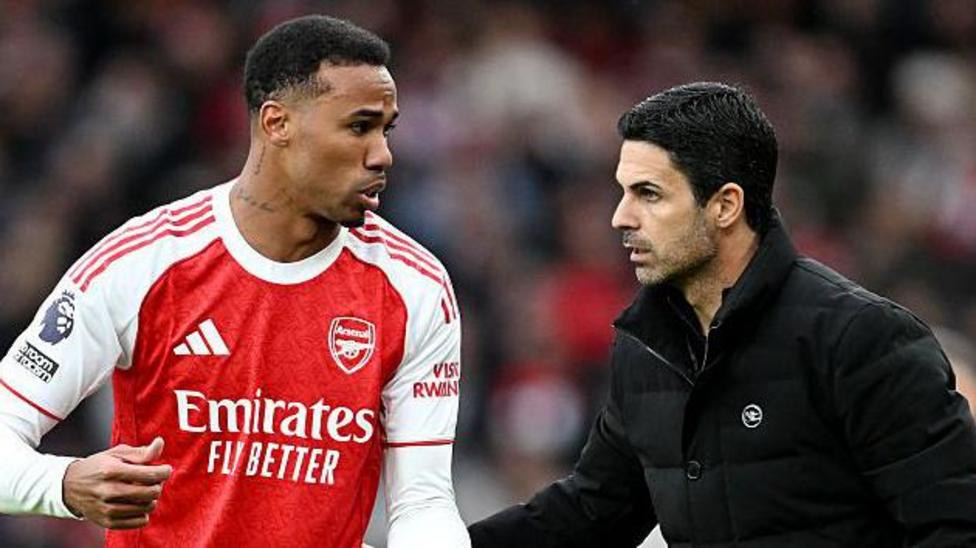
Mastering the False Nine: The Mikel Merino Gambit
One of the most intriguing tactical avenues available to Arteta involves the deployment of Mikel Merino as an unconventional number nine. Last season, during a narrow semi-final exit, this specific adjustment caused significant friction within the PSG defensive line. The French champions are renowned for their aggressive, man-to-man pressing style, designed to choke the opposition in their own defensive third. By placing a midfielder like Merino in the striker position, Arteta creates a profile that PSG’s center-backs, particularly Willian Pacho, find difficult to track. Pacho is naturally hesitant to follow a runner deep into the middle of the park, fearing he will leave a cavernous gap in the defensive line for others to exploit.
When Merino drops into central midfield, he effectively creates a numerical overload that PSG’s midfield trio struggles to manage. If a PSG midfielder shifts across to mark him, it inevitably leaves another Arsenal technician—perhaps Declan Rice or the ever-mobile David Raya as a passing option—with time and space to dictate play. This positional fluidity is a core tenet of Arteta’s philosophy. While Swedish marksman Viktor Gyokeres has been in scintillating form, the tactical flexibility offered by Merino or Kai Havertz allows Arsenal to bypass the press with precision. It forces the opponent to choose between maintaining their shape or committing to a man-marking scheme that can be picked apart by intelligent movement.
Furthermore, this strategy prepares Arsenal for the inevitability of high-pressure situations. Against a team that hunts the ball in packs, the long ball remains a vital release valve. Both Merino and Havertz possess the aerial prowess to either bring down a direct pass from Raya or flick it on for the surrounding midfield swarm. This directness, often overlooked in Arsenal’s possession-heavy game, allows them to turn the tide of a match in an instant. By winning second balls in the final third, the Gunners can keep PSG pinned back, preventing the likes of Vitinha from establishing the rhythm they so desperately crave.
The Bravery to Play in Crowded Spaces
For all their defensive solidity, PSG have shown vulnerabilities when confronted by teams willing to play through the middle in high-traffic areas. This season, clubs like Bayern Munich and Chelsea have found success by drawing the PSG man-markers into tight, clustered groups. By positioning players close together, these teams create a magnet effect, pulling the Paris defense out of position and creating isolated pockets of space elsewhere on the pitch. Arsenal have historically been a team that favors the safety of the wide areas, using Bukayo Saka and their full-backs to stretch play, but this final may require a more daring central approach.
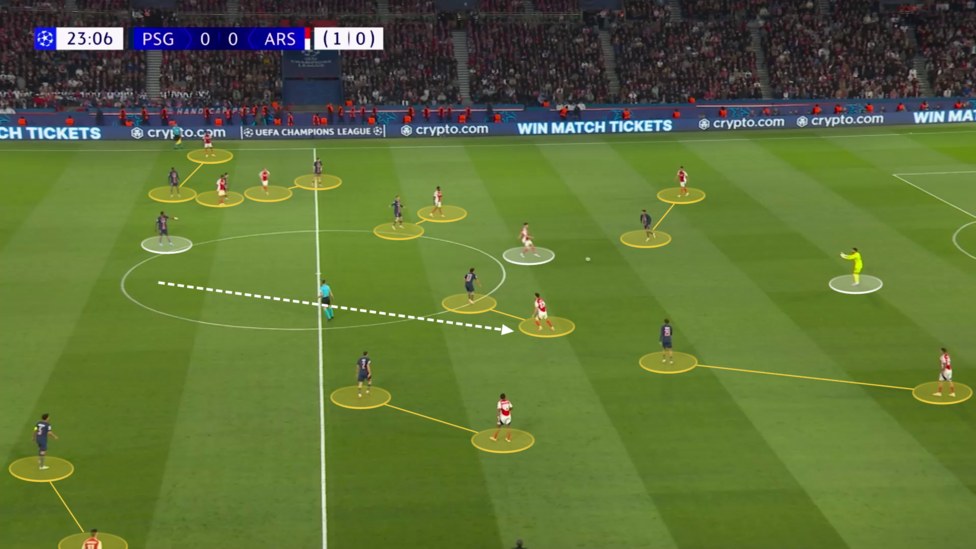
Arteta has the personnel to embrace this risk. In players like Leandro Trossard, Martin Zubimendi, and Eberechi Eze, Arsenal possess some of the most gifted close-quarters technicians in the world. These are players who thrive when the walls are closing in, capable of receiving the ball with a marker on their back and turning into space. If Arsenal can show the bravery to release the ball from these crowded central hubs into the open flanks, they will find PSG’s defensive structure increasingly brittle. The risk of a counter-attack is real, but the reward of bypassing a man-to-man system is often a clear sight of Gianluigi Donnarumma’s goal.
This central progression also serves to tire the opposition. Man-to-man systems are physically taxing, requiring constant concentration and sprinting. If Arsenal can move the ball quickly between Zubimendi and Eze in the heart of the pitch, the PSG engine room will eventually fatigue. It is in these moments of late-game tiredness that Arsenal’s superior fitness and tactical discipline often manifest. The goal is to make PSG work for every yard, turning the pitch into a series of small, intense battles that the Gunners are well-equipped to win.
Neutralizing the Fluidity of Kvaratskhelia and Doue
Stopping the Paris attack is a multifaceted puzzle, primarily centered around the explosive Khvicha Kvaratskhelia. The right-footed winger is a constant threat from the left touchline, using his dribbling and off-the-ball movement to pull defensive units apart. Luis Enrique’s PSG operates on a system of rotational rules; they occupy specific zones—the flanks, the center-forward spot, and the defensive base—but the players in those zones are constantly changing. This fluidity makes it incredibly difficult for a traditional defense to maintain its shape, as defenders are often unsure whether to stick or twist when a runner enters their zone.
The threat posed by Desire Doue dropping deep is another major concern for the Arsenal backline. When Doue vacates the attacking line, he often draws a center-back with him, creating a vacuum for Kvaratskhelia to exploit with his trademark darting runs in behind. To nullify this, Arsenal must commit to a definitive defensive approach. They can either stay touch-tight to the dropping forwards, denying them time to turn and pick a pass, or they can drop their entire block deeper, sacrificing territory to ensure there is no space for the PSG speedsters to run into. Consistency in this decision-making will be the hallmark of William Saliba and Gabriel’s performance.
Arteta’s previous encounters with PSG have shown he is capable of making mid-game adjustments that swing the momentum. Last season, he shifted Martin Odegaard’s pressing role higher up the pitch, which successfully disrupted the supply line to the PSG midfielders. Simultaneously, William Saliba was tasked with shadowing Ousmane Dembele with relentless intensity, even following him into his own half. This man-to-man defensive nuance, championed by managers like Enzo Maresca, might be the only way to truly silence a PSG attack that is capable of scoring from any angle.
The Set-Piece Weapon: Targetting the Back Post
It is impossible to discuss an Arsenal victory without highlighting their most potent weapon: the dead-ball situation. While PSG boast a formidable squad, their defensive record against non-penalty set-pieces remains a glaring weakness. They have conceded a significant portion of their goals from corners and free-kicks, often struggling with the physical dimensions of their opponents. For Nicolas Jover, Arsenal’s set-piece coach, this is the area where the final could be won or lost. The blueprint has already been laid out by teams like Tottenham Hotspur, who found joy by targeting the back post with floating crosses.
PSG’s defenders often appear uncomfortable when tracking the flight of a ball that passes over their heads. By the time they turn to adjust their positioning, they are moving in the opposite direction of the ball’s eventual path, giving the attacker a significant advantage. Arsenal’s height and timing, led by Gabriel and Saliba, are perfectly suited to this tactic. The aim is to win the first header at the back post and nod it back across the face of goal, where the likes of Havertz or Eze can capitalize on the ensuing chaos. In a final likely to be decided by razor-thin margins, a single well-worked corner could be enough to secure the trophy.
Ultimately, the path to Champions League glory for Arsenal lies in their ability to balance caution with calculated aggression. They must respect the PSG counter-attack while having the confidence to dominate the central areas of the pitch. If Arteta can successfully integrate the false-nine movement of Merino with the clinical set-piece execution that has defined their season, the Gunners will be well on their way to making history. It is a game of chess played at 100 miles per hour, and Arsenal look ready to make the first move. more football news on MATCHLINE