
Javier Aguirre’s El Tri makes World Cup history with a perfect group stage record while the United States secures a knockout berth in Group D.
The roar that cascaded down the steep concrete terraces of the Estadio Azteca on Wednesday was not merely a celebration of a 3-0 victory over the Czech Republic. It was the sound of history being forged in the thin air of Mexico City. For the first time in the nation's long and storied relationship with the World Cup, El Tri has completed a group stage with a perfect three wins from three matches. Under the veteran guidance of Javier Aguirre, a man whose DNA is interwoven with the Mexican national team, this squad has transitioned from a collection of talented individuals into a cohesive, disciplined family unit that looks increasingly like a genuine contender on the global stage.
While the focus remained on the pitch in Mexico City, the sheer scale of the 2026 tournament is becoming apparent across the continent. From the shimmering heat of the Southern United States to the cooler climates of the North, the variety of venues is providing a unique tapestry of footballing experiences. The logistics of such a sprawling tournament are immense, but the infrastructure in cities like Los Angeles is already proving why they were selected to host the business end of the competition. The sprawling expanse of the Los Angeles Stadium stands ready to host key knockout fixtures, having already established itself as one of the premier architectural jewels of the American leg of the tournament.
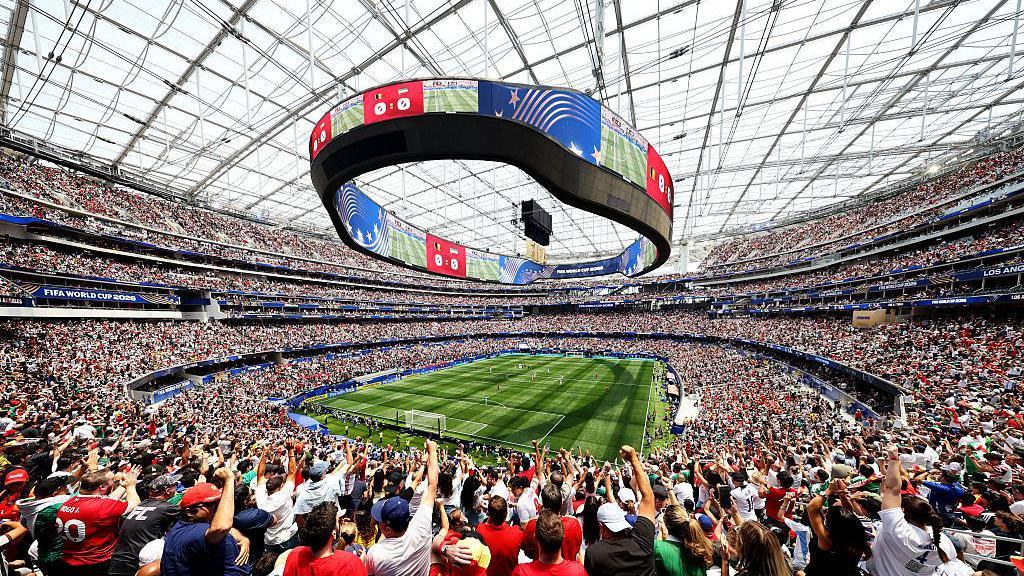
The Aguirre Revolution and a Perfect Sweep
Javier Aguirre has long preached that the foundation of success lies in the emotional bond between his players. This philosophy was on full display as Mexico dismantled a resilient but ultimately outclassed Czech Republic. After a tense first half that saw the visitors struggle to cope with the altitude and the unrelenting pressure from the stands, the deadlock was finally broken in the 55th minute. Mateo Chavez, making his World Cup debut at just 22, fired home a clinical finish that sparked wild celebrations. The emotional weight of the moment was clear as Chavez later described the goal as something he would take to his grave, a dream realized on the grandest stage imaginable.
The momentum did not stall there. Julian Quinones doubled the advantage only six minutes later, marking his second goal of the tournament and effectively killing off any hopes of a Czech comeback. Alvaro Fidalgo added a third in stoppage time to put the gloss on a performance that saw Aguirre utilize 25 out of his 26 squad members across the three group games. This rotational strategy has not only kept his key players fresh but has fostered a sense of inclusion and collective responsibility that Aguirre believes is the key to their historic journey. The Czech Republic, meanwhile, exits the tournament with just a single point, unable to find their rhythm in a group that Mexico dominated from start to finish.
A Cathedral of Football and Modern Marvels
The success of the Mexican national team is inextricably linked to the venue that has become their fortress. The legendary Azteca Stadium provides a historic backdrop as the tournament gets underway, and it remains a place where football history oozes from every crevice. Having hosted the opening match of this tournament, the stadium has once again proven to be a stage like no other. The shimmering quality of the pitch and the passionate backdrop of the Mexican supporters create an atmosphere that few other venues can replicate. It is a ground where the ghosts of Pele and Maradona seem to linger, and where the current generation is now writing its own chapters.
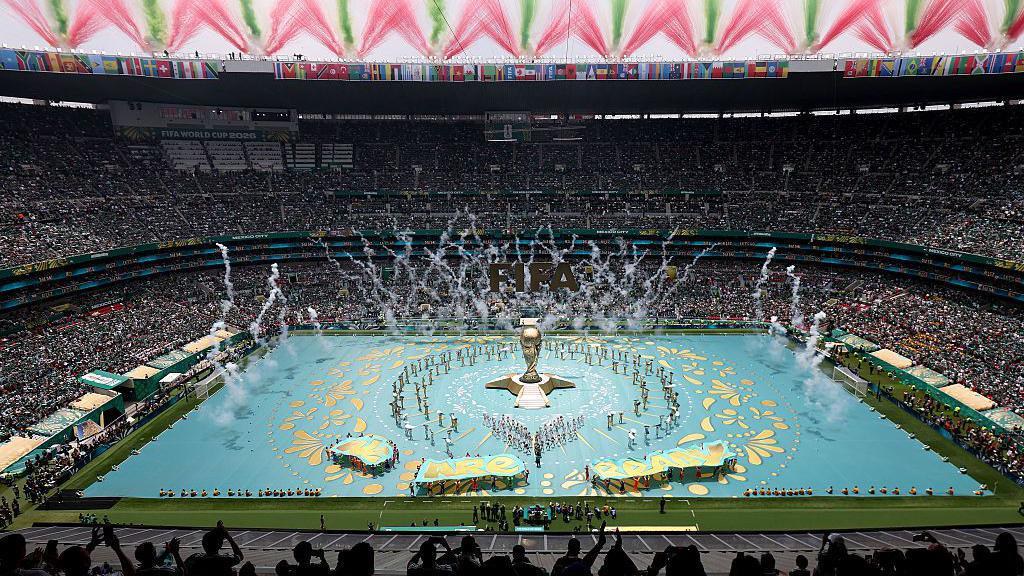
Contrast this with the ultra-modern experiences elsewhere in the tournament. In Seattle, Lumen Field has gained a reputation as one of the loudest venues in sporting history. The horseshoe design acts as a natural amplifier, bouncing the crowd’s energy back onto the pitch with enough force to make the structure physically shake. Fans have reported being able to hear the roar from nearly half an hour’s walk away. In Dallas, the experience is defined by climate control and technological luxury. The air-conditioned environment provides perfect conditions for the athletes, while the massive television screens ensure that every tactical nuance is visible to the capacity crowds. Each host city is bringing a distinct flavor to the 2026 experience, from the BBQ culture of Kansas City to the tailgating traditions in Philadelphia.
Milestones for Legends and Rising Stars
The victory over the Czech Republic was also a night of significant personal milestones. Guillermo Ochoa, the ageless guardian of the Mexican goal, entered the match in the 77th minute to secure his place in the record books. At 40 years old, Ochoa has now appeared in six different World Cups, joining an elite stratosphere of longevity occupied only by Lionel Messi and Cristiano Ronaldo. The veteran goalkeeper, who plans to retire after this tournament, was given a standing ovation as he took his place between the posts for a final domestic farewell. His presence remains a calming influence on a squad that also features the tournament's youngest starter, 17-year-old Gilberto Mora.
Mora’s inclusion is a testament to Aguirre’s willingness to trust in youth. The teenager did not look out of place on the hallowed turf of the Azteca, showing a technical maturity that belied his age. The blend of Ochoa’s immense experience and Mora’s fearless energy encapsulates the current state of Mexican football. While the night was slightly marred by the return of a controversial homophobic chant that has plagued the federation in the past, the sporting narrative remains overwhelmingly positive. Mexico now moves into the Round of 32 as group winners, a position that gives them the advantage of staying at the Azteca for their next knockout clash on Tuesday.
United States and the Group Stage Fallout
North of the border, the United States Men’s National Team has also secured its passage to the knockout rounds. A 2-0 victory over Australia ensured that the Americans clinched first place in Group D, the first time they have won their group since the 2010 tournament in South Africa. The win was confirmed after Paraguay defeated Türkiye, leaving the US in an unassailable position ahead of their final match against the already eliminated Turkish side. The American performance has been characterized by defensive solidity and clinical finishing, traits that will be essential as they prepare for a Round of 32 matchup in Santa Clara on July 1.
Elsewhere in the tournament, the group stages are throwing up the usual mix of shocks and inevitable progressions. South Africa provided one of the biggest surprises by defeating South Korea to claim the second-place spot in Group A, a result that leaves the Koreans sweating on other results to see if they can advance as one of the best third-place teams. In Group B, Switzerland and Canada have both progressed, while Germany has comfortably secured its spot in the next round after a late winner from super-sub Denis Undav against the Ivory Coast. The bracket is beginning to take shape, and the prospect of heavyweight clashes in the knockout rounds is looming large.
As the group stage draws to a close, the narrative is shifting from survival to ambition. Mexico’s historic sweep has transformed them from dark horses into a team that the world must now take seriously. The advantage of home soil, the tactical shrewdness of Aguirre, and the emotional farewell of a legend like Ochoa have combined to create a perfect storm of momentum. For the fans at the Azteca and across the host nations, the real World Cup starts now. The knockout stages will test the depth and resolve of every squad, but for one night in Mexico City, the celebration of a perfect record was all that mattered for a nation that finally believes its time has come. more football news on MATCHLINE