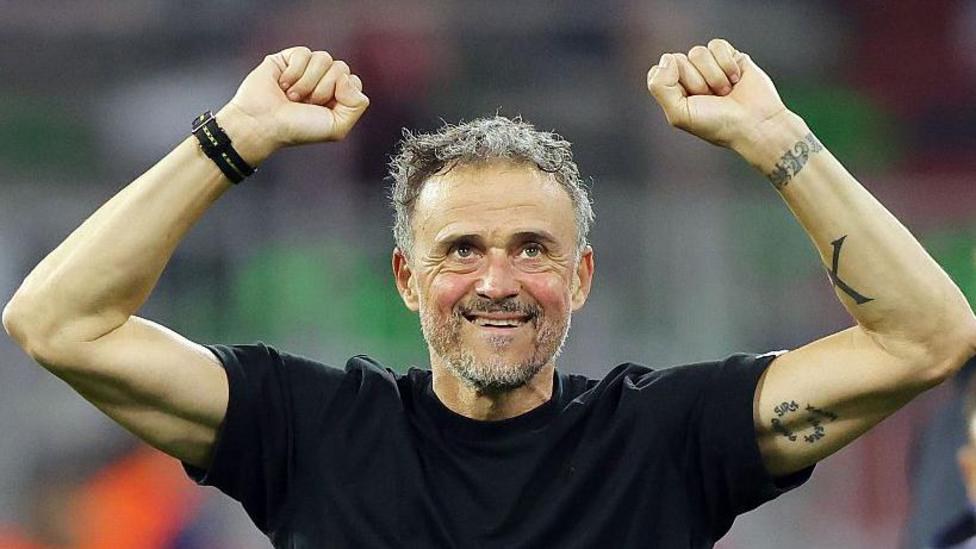
Luis Enrique has dismantled the superstar culture at PSG, forging a disciplined collective that has finally found its identity on the European stage.
Paris Saint-Germain stand on the precipice of a defining moment in their modern history. As they prepare to defend their Champions League crown against Arsenal, the French giants look nothing like the disjointed collection of individual stars that defined their first decade under Qatari ownership. The transformation is not merely about personnel; it is a profound cultural reset orchestrated by Luis Enrique. The Spaniard has done what many thought impossible in the French capital: he has made the team larger than the individual. This shift marks the definitive end of the 'bling-bling' era, a period where marketability often outweighed tactical cohesion and dressing room discipline.
The journey to this point began in 2011 when Qatar Sports Investments first entered negotiations for a club that was effectively a sleeping giant. At the time, PSG were languishing in the lower half of Ligue 1, finishing 13th just a year prior. Nasser Al-Khelaifi, then leading the negotiations, found himself checking scores with a sense of dread, fearing the investment group might inadvertently purchase a second-division side. The club they bought was a paradox—situated in a major European capital with a staggering talent pool in its suburbs, yet lacking any semblance of the structure or prestige required to compete with the continental elite.
The Fragile Foundations of the Superstar Model
In those early years, the strategy was clear: buy relevance. PSG needed to be seen as credible, and the fastest route to global visibility was through the acquisition of household names. Zlatan Ibrahimovic, Neymar, Kylian Mbappe, and eventually Lionel Messi were brought in to force PSG into the global consciousness. It worked as a branding exercise, but it created a monster within the club's walls. The dressing room became a place where stars dictated the terms of engagement. Power dynamics shifted away from the manager's office and toward the entourages of the world's most expensive players. This was the era of 'bling-bling'—high on glamour but hollow in soul.
Internal disputes became the stuff of legend and a constant source of embarrassment for the hierarchy. There were clashes over penalty duties and training schedules. A particularly telling incident occurred during Unai Emery's tenure when NBA legend Kobe Bryant visited the training ground. Both Neymar and Mbappe wanted to deviate from the recovery schedule set by Emery to impress the basketball icon. While Emery technically won that battle, the scars of such constant insubordination left the club feeling fragile. The star-centric model had reached its ceiling; domestic dominance was easy, but European success required a level of collective sacrifice that a group of individual icons was unwilling to provide.
The Luis Enrique Revolution
The appointment of Luis Enrique signaled a departure from the practice of hiring a coach to manage egos. Instead, the club chose a footballing identity first, then found the man to implement it. Luis Enrique arrived as a force of nature, backed by a newly unified leadership structure involving sporting director Luis Campos and Al-Khelaifi. For the first time, the priorities were reset. Iconic figures like Messi, Neymar, and Sergio Ramos were moved on. The club wasn't necessarily punishing them for their talent, but rather acknowledging that their presence inhibited the development of a coherent team structure. No player, regardless of their status or shirt sales, was to be above the collective.
Discipline became the new currency at the Parc des Princes. Luis Enrique demanded a work rate that some of the previous regime's stars found unpalatable. When Kylian Mbappe showed a reluctance to engage in the defensive press, the manager was reportedly content to see the forward depart. The most striking example of this new regime occurred in September last year when Ousmane Dembele arrived just ten minutes late for a training session ahead of a crucial Champions League fixture. Under previous managers, such a minor infraction might have been ignored for a star player. Under Luis Enrique, Dembele was dropped instantly. The message was sent: the rules apply to everyone, every day.
A French Heart and Academy Growth
Central to this cultural shift has been a renewed focus on French identity. For years, PSG's academy was a goldmine for other European clubs, with local talent often leaving for Germany or England before they could make their mark in Paris. Now, the club has invested 350 million euros into a world-class training center designed to foster homegrown talent. The results are already evident on the pitch. Nearly half of the team's playing time this season has been handed to French players, many of them graduates of the club's youth system. This isn't just about optics; it is about building a team that feels a genuine connection to the city and the shirt.
The statistics reflect a team that has embraced youth and vitality. This season, PSG's average starting XI was under 24 years old—the second youngest among Europe's top five leagues. Six academy graduates made their first-team debuts, signaling a sustainable path forward that doesn't rely solely on the transfer market. This youthful energy has translated into a different style of play. Luis Enrique famously prefers five players scoring ten goals each over one player scoring fifty. With 20 different goalscorers across the campaign, PSG have become a multi-dimensional threat, far harder to neutralise than when they relied on the individual brilliance of a front three.
Refusing to Panic in the Face of Adversity
Perhaps the most significant change at the club is the newfound patience shown by the board. In previous seasons, a few poor results in Europe would have triggered a wave of panic signings in the January window or talk of a coaching change. That volatility has been replaced by a quiet confidence in the project. Following defeats to Arsenal and Bayern Munich earlier this season, the French media expected a flurry of activity in the winter market. Instead, the club made just one marquee signing—Kvicha Kvaratskhelia—and reaffirmed their commitment to the existing squad and the tactical vision of the coaching staff.
This stability stems from an alignment at the top that PSG has lacked for most of the QSI era. The trio of Luis Enrique, Luis Campos, and Nasser Al-Khelaifi operate with a shared vision. Enrique defines the football, Campos manages the recruitment to fit that football, and Al-Khelaifi protects the project from external noise. This unity has even extended to the club's political stance, with Al-Khelaifi leading the opposition to the European Super League. By arguing for an open system, he has positioned PSG as a defender of the traditional footballing pyramid, a far cry from the 'nouveau riche' disruptor image they once cultivated.
The Long Road Ahead
Despite the progress, PSG still face structural challenges that money alone cannot solve. Their stadium capacity remains a bottleneck compared to the 60,000 to 80,000-seater arenas of their European rivals. Furthermore, the financial gulf in television revenue between Ligue 1 and the Premier League remains staggering. While the top English clubs can expect nearly 200 million euros in TV money, PSG's domestic share is a fraction of that amount. To remain competitive, they must continue to innovate, both in their commercial operations and their player development pathways.
However, for the first time in fifteen years, PSG are no longer a club searching for a soul. They know what they want to be: a disciplined, high-pressing, French-centric team led by a manager with absolute authority. Whether they win or lose against Arsenal on Saturday, the transformation is complete. The 'bling' has been polished away, revealing a football club that is finally comfortable in its own skin. The era of the individual has died, and in its place, a team has finally been born. more football news on MATCHLINE